Loading article

Cookie preferences
We use strictly necessary storage for site operation and optional categories for experience, measurement, and marketing. Choose what Gelectric can use, and update it any time from Cookie Settings in the footer.
Cookie preferences
We use strictly necessary storage for site operation and optional categories for experience, measurement, and marketing. Choose what Gelectric can use, and update it any time from Cookie Settings in the footer.

Gelectric Editorial Team
If you work in the shipping industry, you may have heard of the Energy Efficiency Existing Ship Index (EEXI). But what exactly is EEXI and why is it important?
EEXI is a measure of the energy efficiency of a ship based on its design, construction, and operational practices. It is part of the Energy Efficiency Design Index (EEDI) system, which was developed by the International Maritime Organization (IMO) to reduce greenhouse gas emissions from ships.

Under the EEDI system, ships are required to meet certain targets for energy efficiency based on their size, type, and operation. The EEXI is a measure of a ship's actual energy efficiency, while the EEDI is a measure of the potential energy efficiency of a ship based on its design.
The EEXI is calculated based on the ship's fuel consumption and the distance it travels. It is expressed as a percentage of the reference line, which is determined by the IMO based on the average energy efficiency of similar ships. Ships with an EEXI above the reference line are considered less energy efficient, while ships with an EEXI below the reference line are considered more energy efficient.
The shipping industry is a major contributor to global carbon dioxide emissions, and addressing climate change is a critical challenge. By encouraging ships to adopt energy-efficient technologies and practices, the IMO hopes to reduce the environmental impact of shipping and help address this issue.
EEXI and EEDI are important tools for achieving this goal, as they provide a way to measure and compare the energy efficiency of different ships. By setting targets for energy efficiency and encouraging ships to meet or exceed these targets, the IMO is helping to drive the adoption of more sustainable practices in the shipping industry.
In conclusion, EEXI is a measure of the energy efficiency of a ship based on its design, construction, and operational practices. It is an important tool for reducing greenhouse gas emissions from the shipping industry and addressing the challenge of climate change.
Receive our monthly maritime intelligence report directly in your inbox.
Expand your knowledge with these recent publications.

When the International Maritime Organization (IMO) introduced the Energy Efficiency Existing Ship Index (EEXI), shipowners faced a strict mandate: establish a technical design benchmark to ensure existing vessels meet carbon intensity...
References:
International Maritime Organization (IMO). (2021). Energy Efficiency Design Index (EEDI). Retrieved from https://www.imo.org/en/OurWork/Environment/PollutionPrevention/AirPollution/Pages/Energy-Efficiency-Design-Index-(EEDI).aspx
United Nations Framework Convention on Climate Change (UNFCCC). (2021). Shipping and climate change. Retrieved from https://unfccc.int/process/bodies/body/6180.php
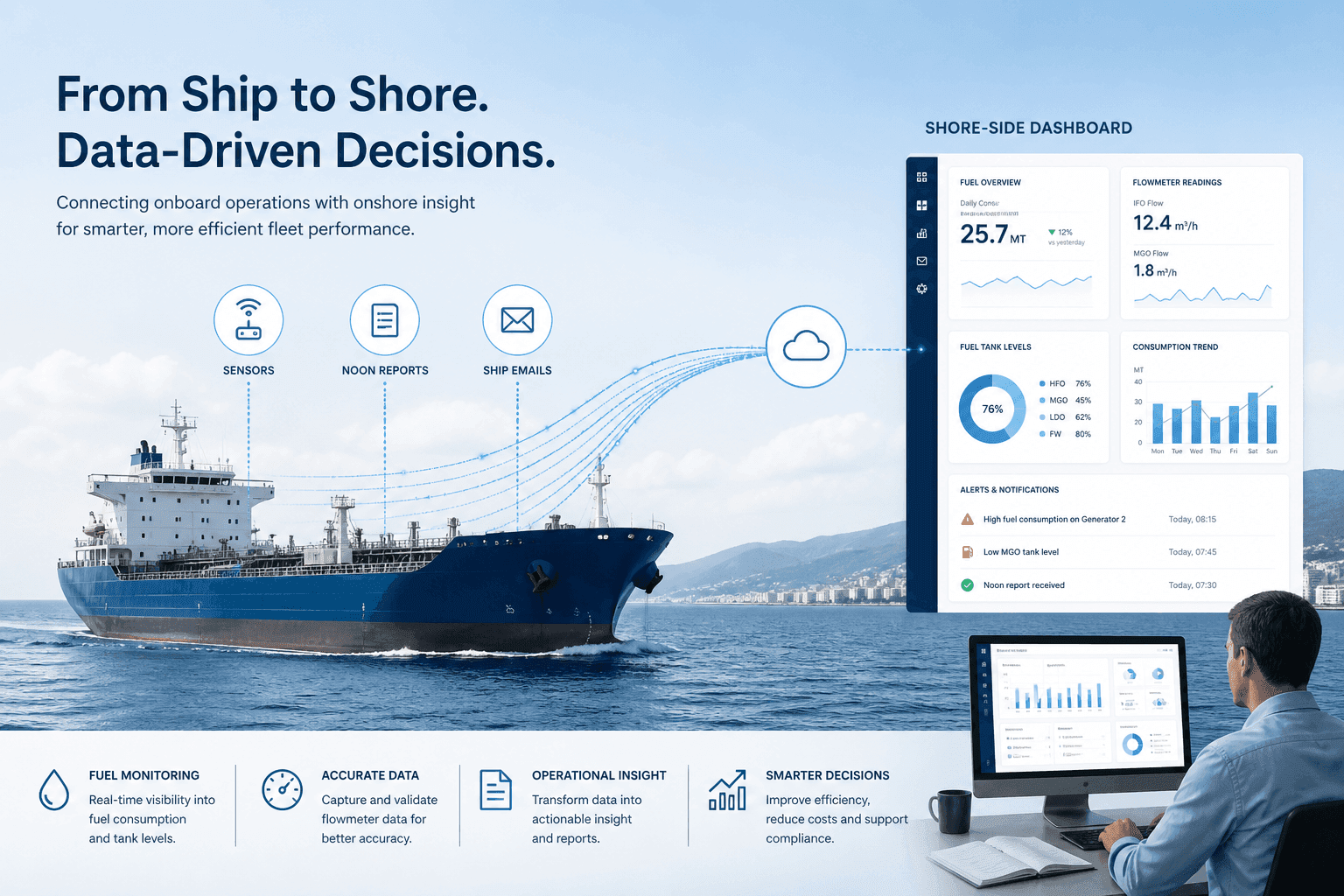
In many fleets, digital flowmeters are already installed on board. But in practice, the data is often still checked locally on the vessel, used only for limited reporting purposes, or reviewed after the fact. As EU MRV requirements continue...

Meeting regulatory demands in the maritime industry is no small feat. As shipowners and fleet managers, you face increasing pressure to comply with environmental standards while maintaining operational efficiency. The EU Monitoring,...