Vessel Monitoring
Connects available equipment readings and operating context for ship-to-shore visibility.
Explore Vessel Monitoring
Machinery Health & Maintenance
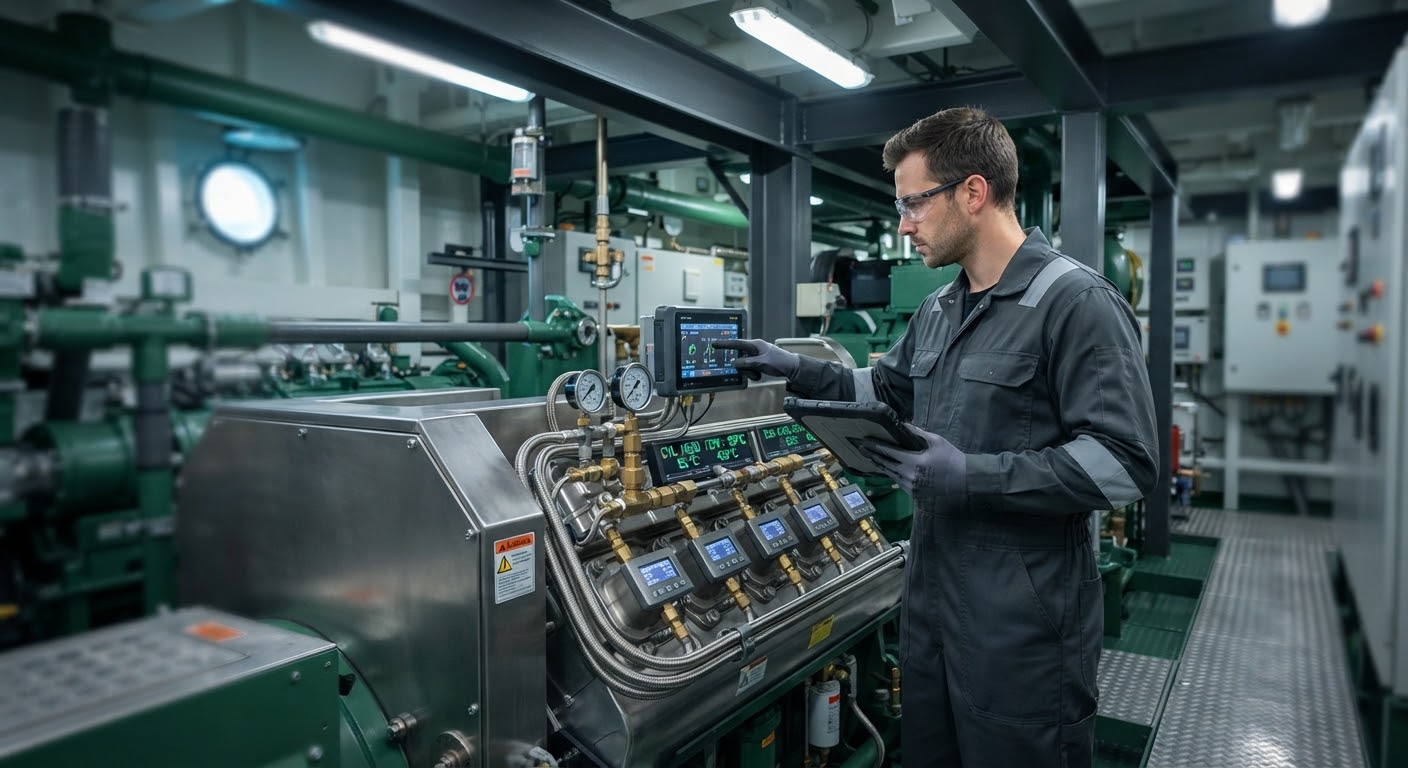
Investigating an unusual machinery reading takes operating context, the right manual, and maintenance history. Bring that information together so crew and shore teams can understand the change and plan the next check.
The operational challenge
An unusual reading is only the start of an investigation. Engineers also need operating context, the right manual, and a record of what happened last time. Bring that information into the same workflow for crew and shore teams.
“How have cooling-water temperatures changed since the last maintenance visit?”
Chief Engineer onboard and Technical Superintendent ashore
A shared investigation into equipment behavior and maintenance history.
A practical workflow
See how equipment readings, documentation, and crew observations support an engineering investigation.
Illustrative example · The workflow depends on your available data and setup.
Review available temperatures, pressures, or vibration alongside the machinery’s operating loads.
Equipment observation
Bring in supplied manuals and previous service records to understand the equipment’s history.
Relevant documents
Explore readings and records together, then ask the onboard team to verify the relevant observations.
Questions for the team
Use the findings to support the engineer’s inspection priorities and maintenance planning.
Planning note
Operational value
Bring readings, manuals, and service history into the investigation so engineers spend less time searching across separate records.
Give onboard engineers and technical superintendents a shared operating picture for discussing observations and deciding which checks matter.
Support maintenance decisions with equipment behavior and recorded history, alongside the engineering team’s experience and onboard observations.
Tools for your team
Your available data sources and the task you want to improve determine the right starting point and product combination.
Connects available equipment readings and operating context for ship-to-shore visibility.
Explore Vessel MonitoringHelps your team explore supplied manuals, maintenance history, and connected readings through conversation.
Explore Chat with Your VesselExplore the technical detail:
Tell us how your crew and shore teams investigate machinery changes, what readings you have, and where maintenance records are kept.
Cookie preferences
We use strictly necessary storage for site operation and optional categories for experience, measurement, and marketing. Choose what Gelectric can use, and update it any time from Cookie Settings in the footer.