Loading article
Cookie preferences
We use strictly necessary storage for site operation and optional categories for experience, measurement, and marketing. Choose what Gelectric can use, and update it any time from Cookie Settings in the footer.
Cookie preferences
We use strictly necessary storage for site operation and optional categories for experience, measurement, and marketing. Choose what Gelectric can use, and update it any time from Cookie Settings in the footer.
Gelectric Editorial Team
A typical shore-side superintendent or fleet operations director manages anywhere from 5 to 15 vessels. On any given morning, keeping track of those vessels requires navigating a dense ecosystem of single-purpose software tools: an Alarm Monitoring System (AMS) portal for engine health, a separate web app for noon report verification, a dedicated dashboard for reefer container telemetry, and a maritime weather routing platform.
This fragmented setup has created a widespread operational bottleneck: dashboard fatigue.
Fleet teams spend hours clicking through disconnected tabs, cross-referencing timestamps, downloading CSV files, and manually combining data just to answer straightforward operational questions. When critical information is buried under layers of sub-menus, decision-making slows down, and vital operational insights get missed.
Modern vessels generate thousands of data points every second. In theory, more data should mean better decisions. In practice, isolated software silos turn simple routine checks into time-consuming investigative tasks.
If an auxiliary engine triggers a high-temperature warning on the AMS platform, the superintendent cannot rely on that alert alone. To understand why it happened, they must:
The solution to dashboard fatigue isn’t adding another chart or building a "master dashboard" with dozens of complex widgets. The real breakthrough lies in changing how fleet teams interact with their data.
Receive our monthly maritime intelligence report directly in your inbox.
Expand your knowledge with these recent publications.
Vessels generate a continuous stream of operational and technical information, from condition-monitoring data and machinery trends to performance indicators, maintenance records, alarms, and daily reports. All of this data can provide...
By applying Natural Language Processing (NLP) and context-aware AI models to aggregated maritime data streams, shore-side teams can query their entire fleet using plain everyday language.
Instead of serving as a passive viewer for raw charts, the platform acts as an intelligent partner that scans, connects, and explains cross-system relationships instantly.
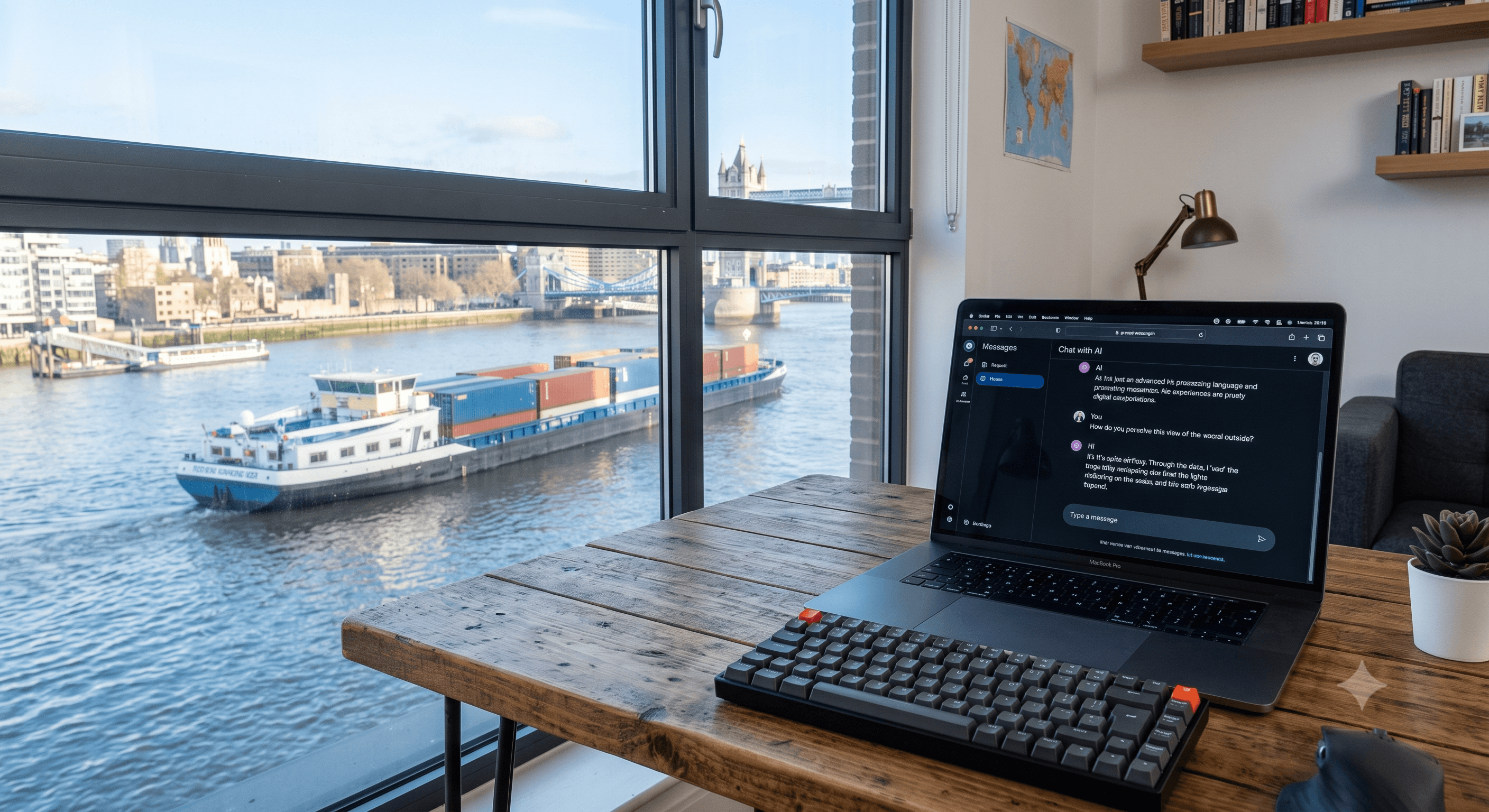
When AMS alerts, noon report records, and equipment telemetry are unified under a single natural language interface, superintendents can retrieve immediate operational clarity across several key areas:
The goal of modern maritime digital operations is not to turn superintendents into data analysts. It is to give experienced marine engineers immediate, clear answers so they can take action faster.
By eliminating the friction of navigating fragmented dashboards, natural language interfaces allow shore-side teams to move from reactive alarm-chasing to proactive fleet management.
Stop clicking through endless tabs and spreadsheets to find the operational answers you need. Experience a simpler, faster way to query your vessel telemetry, noon reports, and equipment health.
Ready to simplify your fleet management workflow?
Contact us today.
Finding a simple answer from all those collected data can still mean navigating multiple dashboards, reviewing complicated graphs, or searching through pages of reports. Gelectric’s new Chat with Your Vessel feature introduces a simpler way...
The maritime industry is evolving fast. As shipowners and fleet managers, you face growing challenges in efficiency, safety, and compliance. Luckily, artificial intelligence (AI) is stepping in to transform how you operate. By harnessing...