Loading article

Cookie preferences
We use strictly necessary storage for site operation and optional categories for experience, measurement, and marketing. Choose what Gelectric can use, and update it any time from Cookie Settings in the footer.
Cookie preferences
We use strictly necessary storage for site operation and optional categories for experience, measurement, and marketing. Choose what Gelectric can use, and update it any time from Cookie Settings in the footer.

Gelectric Editorial Team
When the International Maritime Organization (IMO) introduced the Energy Efficiency Existing Ship Index (EEXI), shipowners faced a strict mandate: establish a technical design benchmark to ensure existing vessels meet carbon intensity targets comparable to modern builds.
To comply, many operators took the fastest technical route: installing Engine Power Limitation (EPL) or Shaft Power Limitation (ShaP) systems, overriding overridable power reserves, and updating their Onboard Management Manuals (OMMs).
However, treating EEXI as a one-time "paper compliance" exercise creates long-term operational and commercial bottlenecks. As charters demand higher efficiency and the operational carbon index (CII) continues to tighten, fleets must understand how power limitations impact day-to-day operations, and how to recover lost performance through data integration.
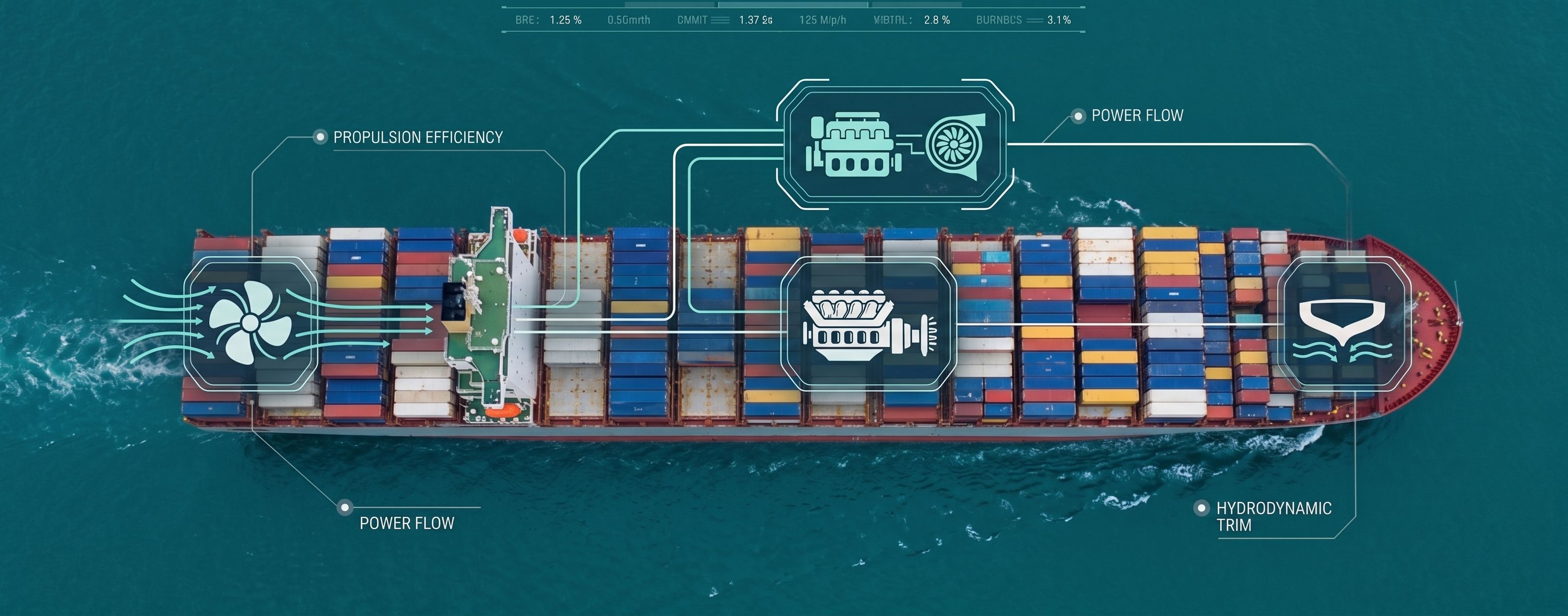
Engine Power Limitation (EPL) effectively caps the maximum continuous rating (MCR) of a vessel’s main engine. While this technical modification successfully lowers the vessel’s calculated CO2 emissions per capacity-mile on paper, it alters how the vessel responds in real-world sea conditions.
Operators navigating post-EPL operations frequently encounter three main challenges:
Main engines are designed to operate within specific Specific Fuel Oil Consumption (SFOC) sweet spots. Derating an engine via EPL often forces it to run at partial loads where thermal efficiency drops, inadvertently increasing relative fuel burn per mile when navigating heavy weather or rough currents.
Capping engine power limits the vessel's ability to maintain speed through water (STW) during adverse sea states. In heavy head seas, vessels with static power caps suffer significant speed loss, leading to voyage delays and increased overall operational risk.
Receive our monthly maritime intelligence report directly in your inbox.
Expand your knowledge with these recent publications.
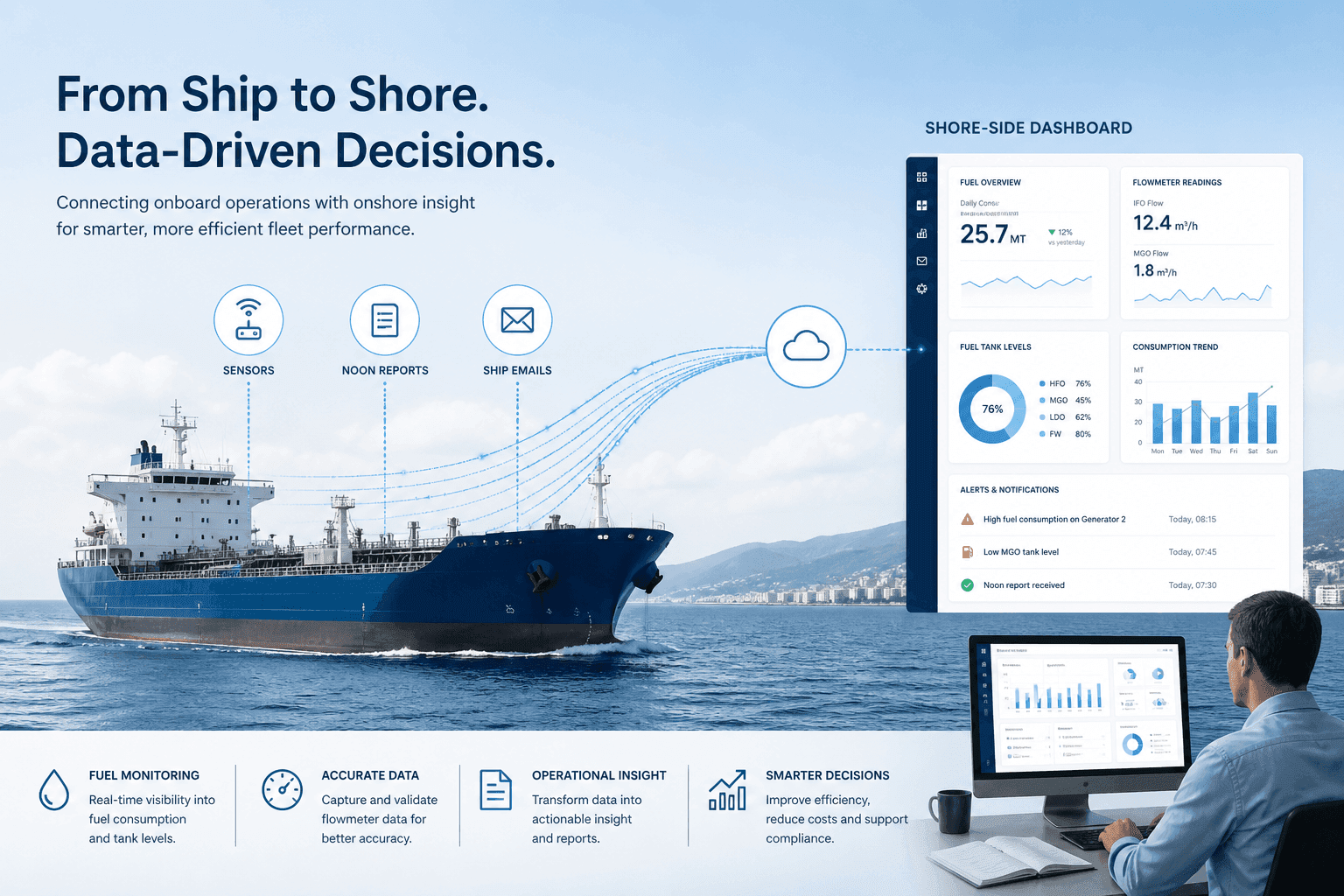
In many fleets, digital flowmeters are already installed on board. But in practice, the data is often still checked locally on the vessel, used only for limited reporting purposes, or reviewed after the fact. As EU MRV requirements continue...
EEXI is a technical design metric (what the ship can emit based on hardware specifications), whereas CII is an operational metric (what the ship actually emits during service). A vessel can be fully EEXI-compliant on paper yet rapidly degrade to a D or E CII rating if operating inefficiently under power restrictions.
Overcoming the operational drag of EPL derating requires moving beyond static power limits. Fleet teams need continuous, real-time data to optimize speed, torque, and fuel consumption within their vessel’s new operational envelope.
Continuous shaft power meters and torque telemetry ensure the engine operates as close to its modified MCR sweet spot as possible without breaching EPL limits or triggering unexcused power reserve overrides.
By combining real-time fuel burn, speed-through-water (STW), and ambient weather feeds, superintendents can provide precise speed-consumption curves to bridge officers. This ensures vessels apply power efficiently when weather permits, rather than burning excess fuel fighting unavoidable currents.
When safety or weather emergencies require unlimiting the engine power reserve, compliance management requires strict, transparent documentation. Automated telemetry systems record exact timestamps, engine loads, and GPS coordinates during an override event, generating instant audit-ready reports for flag state authorities and classification societies.
EEXI compliance set the baseline, but operational visibility determines profitability. Fleet operators who combine technical power limitations with continuous operational data ensure their vessels remain safe, efficient, and commercially competitive in an increasingly regulated landscape.
Is your fleet losing operational efficiency due to power limitations?
Discover how Gelectric Maritime Solutions unify shaft power, fuel consumption, and weather telemetry to help you optimize vessel performance under EEXI and CII constraints. To learn more about our EEXI calculator
Meeting regulatory demands in the maritime industry is no small feat. As shipowners and fleet managers, you face increasing pressure to comply with environmental standards while maintaining operational efficiency. The EU Monitoring,...
Meeting regulatory requirements is no longer optional in maritime operations. The EU Monitoring, Reporting, and Verification (MRV) regulation demands precise attention from shipowners and fleet managers. I understand the pressure to stay...