Loading article

Cookie preferences
We use strictly necessary storage for site operation and optional categories for experience, measurement, and marketing. Choose what Gelectric can use, and update it any time from Cookie Settings in the footer.
Cookie preferences
We use strictly necessary storage for site operation and optional categories for experience, measurement, and marketing. Choose what Gelectric can use, and update it any time from Cookie Settings in the footer.
Gelectric Editorial Team
A question about a compressor should not begin with a search through five folders and three versions of its manual. Yet even a well-documented vessel can make information difficult to find when file names, equipment labels, and service records do not line up.
A conversational tool makes those documents easier to explore. The quality of the starting material still matters. Before introducing maritime AI to your technical team, spend time preparing a small, reliable set of machinery documents.
Choose equipment that generates recurring questions and has an identifiable set of records. A compressor, auxiliary engine, or pump can be a useful starting point. Ask the engineers who work with it which information they regularly need to retrieve.
Keep the first scope manageable. A complete vessel library is less useful for an initial evaluation than a focused collection your team can check confidently.
Record the vessel, equipment tag, manufacturer, model, and relevant configuration. A manual for a similar machine may contain guidance that does not apply to the unit on board. Make that distinction explicit before anyone relies on an answer.
Create a short document register with the file name, revision, equipment reference, and person responsible for confirming it. Include approved amendments and service instructions where relevant. If two documents disagree, resolve the version question with the technical team.
Open the files and inspect the pages engineers actually consult. Are tables legible? Are diagrams complete? Do scanned pages include the full instructions and warnings? Missing pages and poor scans are information problems that a conversational interface cannot remove.
Keep document preparation tied to the task. If the first questions concern maintenance intervals, confirm that the relevant tables and operating conditions are present. If they concern previous repairs, add the appropriate maintenance records to the agreed scope.
Receive our monthly maritime intelligence report directly in your inbox.
Expand your knowledge with these recent publications.

When the International Maritime Organization (IMO) introduced the Energy Efficiency Existing Ship Index (EEXI), shipowners faced a strict mandate: establish a technical design benchmark to ensure existing vessels meet carbon intensity...
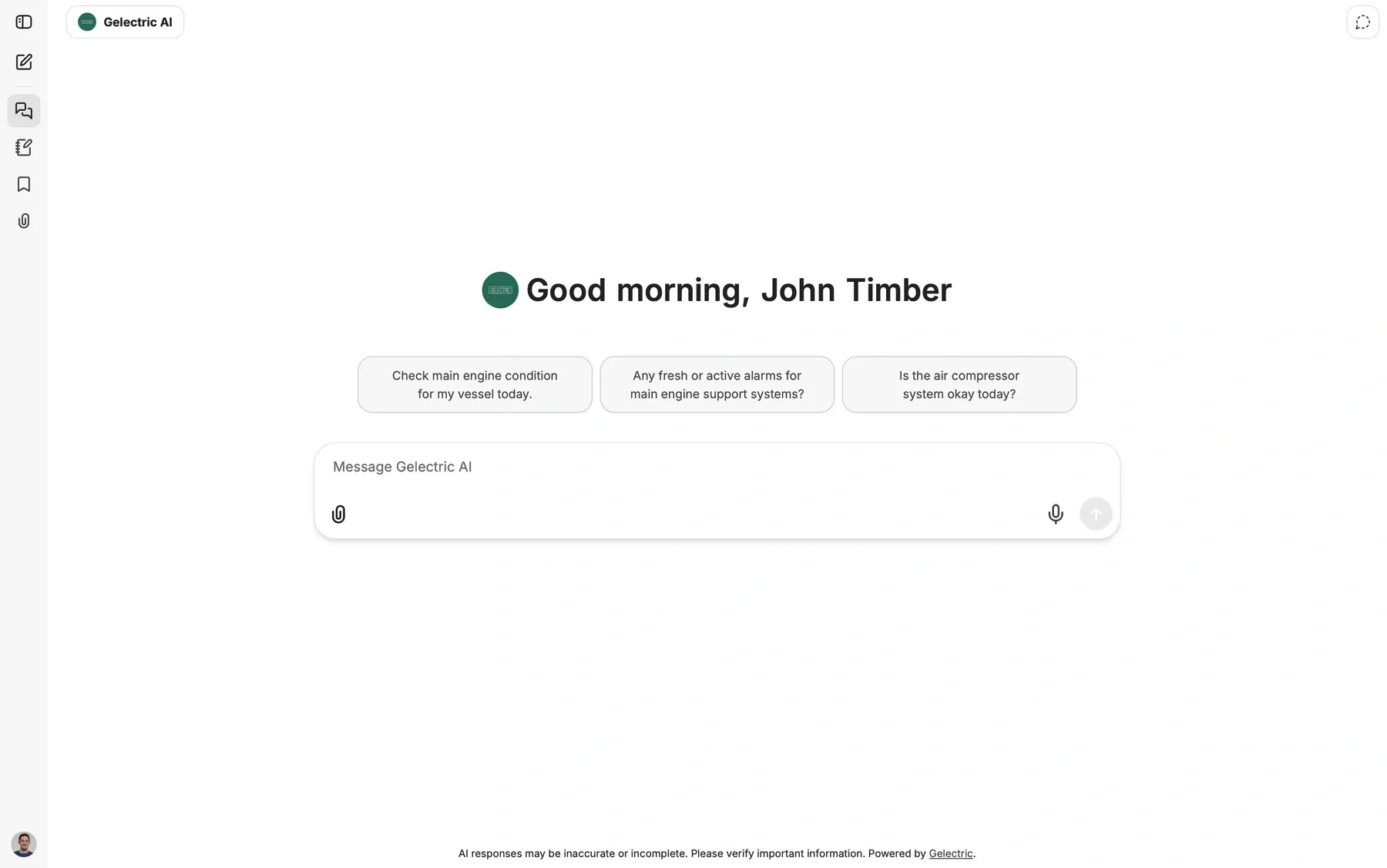
Use questions with answers your engineers can verify against the supplied documents. For example:
The available answers depend on the sources connected. Check the equipment identity, supporting material, and any missing context before using the response in an engineering decision.
Gelectric’s Chat with Your Vessel can start with machinery manuals and documents alone, independently of other Gelectric products. Sensor data, noon reports, and maintenance history can be added when they answer a clear operational need.
That gives your team a practical first objective: make a known set of vessel knowledge easier to find, and assess the answers against records you understand.
Explore Chat with Your Vessel, or request a demo around one equipment question your team asks regularly.
A typical shore-side superintendent or fleet operations director manages anywhere from 5 to 15 vessels. On any given morning, keeping track of those vessels requires navigating a dense ecosystem of single-purpose software tools: an Alarm...

Vessels generate a continuous stream of operational and technical information, from condition-monitoring data and machinery trends to performance indicators, maintenance records, alarms, and daily reports. All of this data can provide...